
More Raptors
New Zealand's raptor story doesn't end with the birds we have today.
Before humans arrived in Aotearoa, our skies were ruled by some of the most formidable birds of prey the world has ever seen. The Haast's eagle, the laughing owl, and Eyles' harrier were extraordinary creatures — now lost forever, but no less important to understanding the full picture of New Zealand's raptor heritage. This page also explores the occasional vagrant raptors that turn up on our shores, blown in from distant lands and offering a rare and exciting glimpse of the wider raptor world beyond our coastline.
Vagrant / Nankeen Kestrel
What other names does the nankeen kestrel have?
Nankeen kestrels are another common vagrant to our shores from Australia, however unlike the barn owl they have never been recorded breeding in New Zealand.
In Australia, like our New Zealand falcon, the nankeen kestrel are often called sparrowhawks, but other names include: Falco cenchroides, Australian kestrel and the windhover, the latter owing to their ability to hover in the air when searching for prey.
What Does the Nankeen Kestrel Look Like and Where Does it Live?
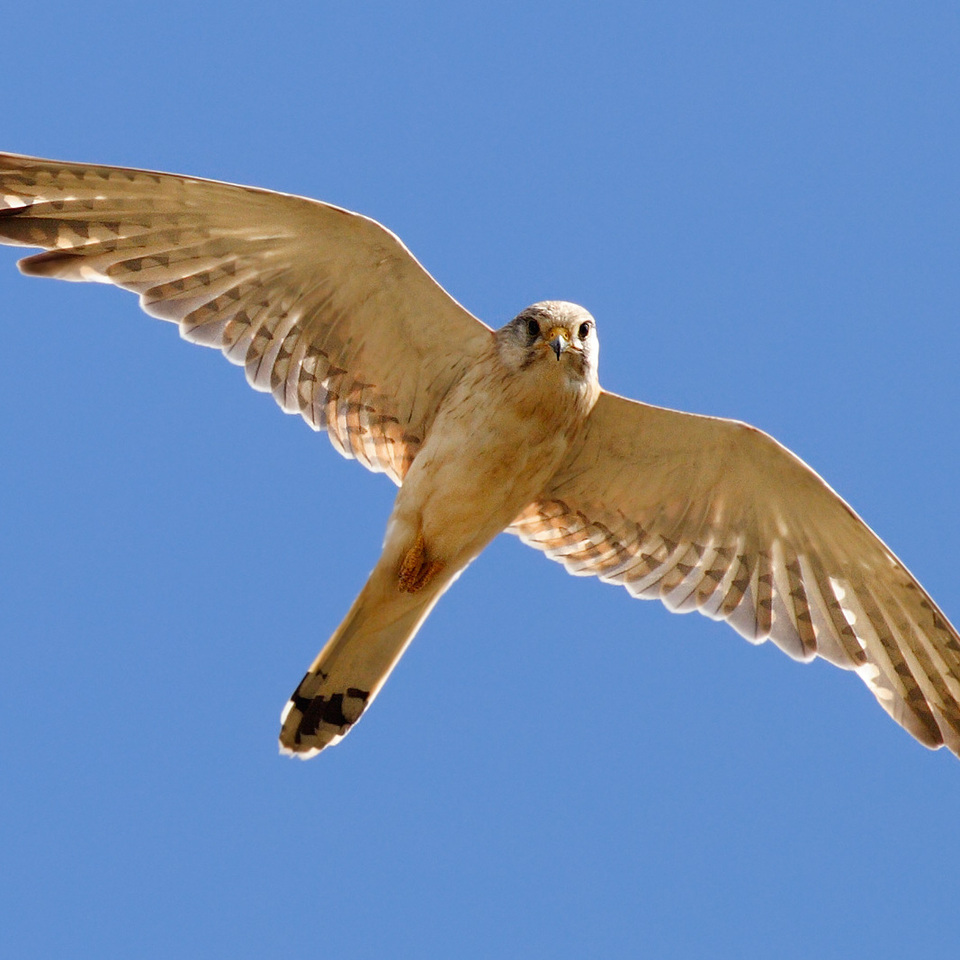
Arguably one of the cutest of raptor species at this end of the globe, they are far daintier than our endemic New Zealand falcon. In their native Australia they are relatively common all over the mainland. They are an open habitat species found along roadsides or on farmland. Like other kestrel species they breed in a variety of places including tree cavities, on cliff ledges and in large stick nests made by other bird species.
Nankeen kestrels feed on small birds, mice, and insects. Their hovering hunting flight makes them easily distinguishable from the New Zealand falcon as does their diminutive size, pointed long wings and chestnut coloured back and black wing tips.
They successively colonised Lord Howe Island in the '40s and Norfolk Island in the '60s. Due to a combination of the frequency of arrival in New Zealand, a track record of colonising other islands and an abundance of suitable habitat and food in New Zealand, it seems probable that a natural breeding population of this species may establish in New Zealand sometime in the future. Further, with the climate changes predicted, New Zealand may become even more suitable for this species. Regardless it is clear that the story of our native raptor fauna is ever evolving.
Image Credits: Ben Twist / "A Nankeen Kestrel in Australia" - GNU Free Documentation License.
Vagrant / Black Kite
What does the black kite look like?
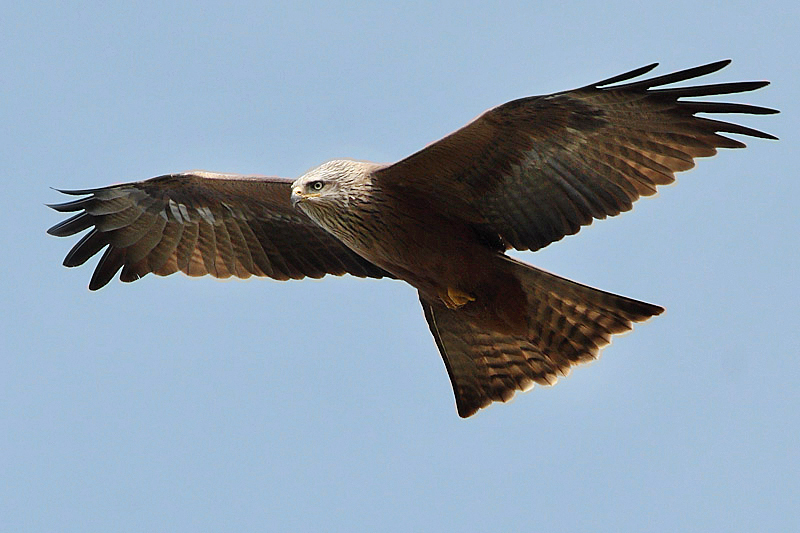
The black kite (Milvus migrans) is very similar in size and shape to the Australasian (swamp) harrier and also inhabits open country.
It differs however from the harrier in flying with a very flat wing (rather than holding its wings in a shallow V-shape) and has a very distinctive V-shaped tail. This V-shaped tail provides its other name, the fork-tailed kite.
Where does the black kite live?
Black kites are common throughout Australia, Africa, Europe and Asia, but compared with the nankeen kestrel are relatively infrequent visitors to our shores. That said when they do come here they do like to stay - one individual set up home just outside of Renwick in the South Island in 1992 and has not left since! Like harriers they are generally scavengers but will also eat insects and take small birds when available. The lack of frequent visitors makes them a relatively unlikely coloniser of New Zealand.
Image: Thomas Kraft / Tim Sträter - licensed under Creative Commons
Vagrant / White-bellied Sea Eagle
What does the white-bellied sea eagle look like?
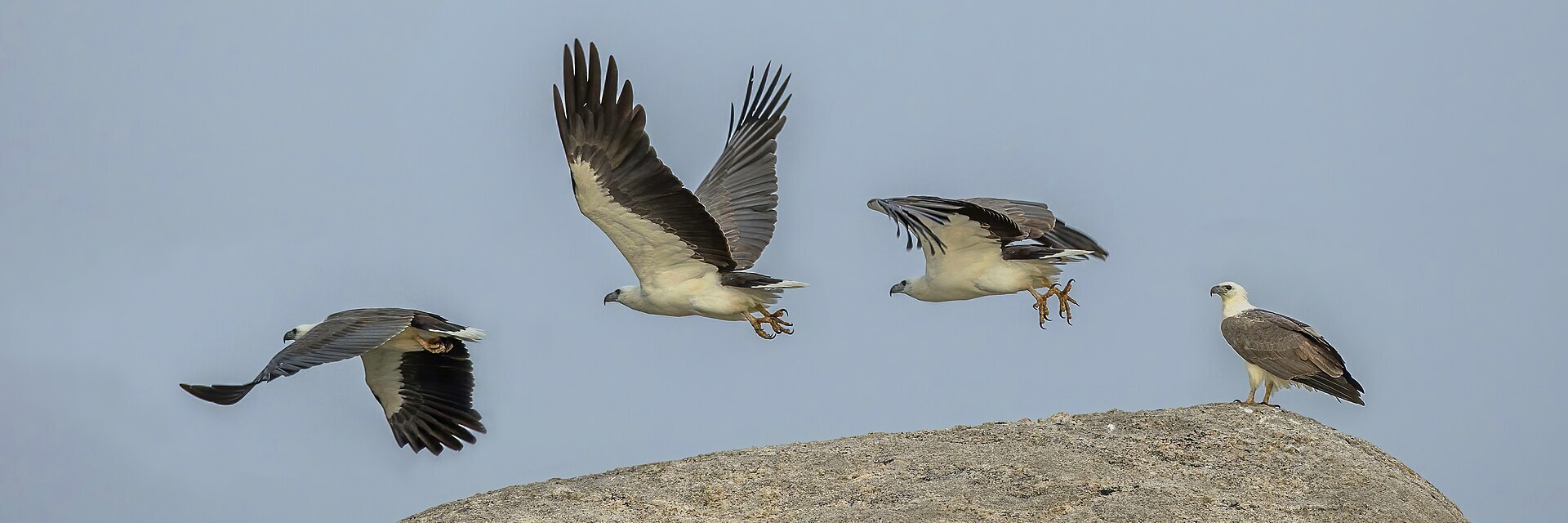
The white-bellied sea-eagle, or Haliaeetus leucogaster, is a magnificent Australian eagle that has a wingspan of over six feet! It has a very large powerful bill and feet, and a striking white head and belly making it hard to confuse with any of New Zealand’s native raptors. Despite this, most observations of this species in New Zealand have never been officially confirmed and although accepted as a vagrant to these shores, it appears that it is a very rare visitor indeed.
What does the white-bellied sea eagle feed on?
Feeding largely on fish that they pluck from the surface of the water in a spectacular swooping stall, they are most often associated with the coast or along permanent water courses and reservoirs. Spending most of their time perched between meals they are often viewed as an enormous white bird sat in a tree.
It was once thought that there had also been a New Zealand sea-eagle called Haliaeetus australis that had become extinct. Subsequent investigations discovered that in actual fact the fossil bones that had led to this discovery were actually bones from a bald eagle (the American species of sea-eagle) that had been mislabelled during an early expedition.

