
Bird Rehabilitation
Bird of Prey Rehabilitation
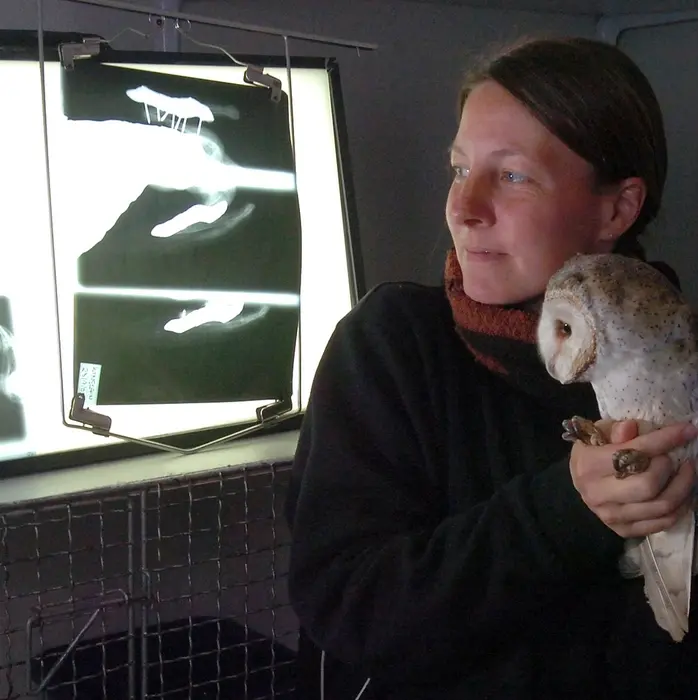
In 1992 Wingspan was set up to fund the rehabilitation of a small number of injured harriers. Today it has grown to become recognised, nationally and internationally as the pre-eminent raptor conservation organisation in New Zealand. While the programme has grown to encompass education, research, and captive breeding, rehabilitation is still a part of the work we do.
Wild raptors come into Wingspan for a variety of reasons, but the most common causes are:
- deliberate shooting
- collisions with vehicles and windows
- lead poisoning, and
- cat attacks
Those that are not too badly injured are treated by our team of experts and, once fit, released back into the wild.
Found an Unwell or Injured Bird of Prey and Need Help?
Birds of prey have sharp talons and sharp beaks and a frightened bird of prey will not hesitate to use them. Additionally, they are protected under the Wildlife Act 1953 and a permit is required to hold them. Licenced rehabbers have the relevant experience and resources to provide specialist care for these birds.
If you discover an unwell or injured bird of prey, do not approach it until you have spoken to the relevant authority or a licenced rehabber. First observe the bird from a distance and take photos or video footage, as this will provide lots of valuable information.
Call Wingspan on +64 7 357 4469 and email photos/video to info@wingspan.co.nz. Outside of office hours, you can also call the 24-hour Department of Conservation emergency hotline on 0800 362 468. The phone operator will ask some questions and provide best-practice guidance on what to do next.
Advice may be impacted by the presence of bird flu in New Zealand (see below).
Avian Influenza (Bird Flu)
High pathogenicity avian influenza (HPAI) H5N1 or "bird flu" has officially reached New Zealand’s shores. This is a highly contagious viral disease that has been spreading overseas causing major mortality events in wild birds, poultry, and some mammals. The risk to human health is low. New Zealand has never had this strain of bird flu before, so it is an unprecedented and evolving situation.
Infected animals shed the virus in their saliva, nasal secretions and faeces and transmission can be both directly (host to host proximity) and indirectly (contaminated water or objects).
Signs of bird flu include weakness or trembling, paralysis/abnormal posture, breathing difficulties, lack of energy or a reluctance to move, diarrhoea, lack of coordination, coughing or sneezing, nasal secretions, blindness, swelling around the head, neck or eyes, or sudden death.
- Report three or more sick or dead birds. Reports can be made to the MPI Pest and Disease Hotline on 0800 80 99 66.
- Do not touch or handle sick or dead birds. If this isn’t possible, wear protective clothing and wash your hands immediately.
- Keep pets away from wildlife.
- When visiting natural areas, keep footwear and clothing clean to prevent spread.
- Keep up to date with news and directives from agencies leading the response.
So, What Does This Mean for Wingspan?
To help protect the health of our resident birds and our staff, we are not currently accepting wild birds at our centre.
As a conservation facility with a large focus on the breeding of a threatened species, bringing wild birds onto site could place the birds in our care at unnecessary risk. If you find a sick or injured wild bird, please do not bring it to the centre.
If you find a bird exhibiting symptoms consistent with bird flu, contact the MPI Pest and Disease Hotline on 0800 80 99 66. All other enquiries can be directed to the DOC Hotline 0800 362 468.
We understand this may be disappointing for those wanting to help our native wildlife, but this decision has not been made lightly. Thank you for your understanding and ongoing support as we navigate this evolving situation. Wingspan otherwise continues to operate as normal.
