Māori & Birds of Prey
‘Ngā whenua i haroa e ngā kāhu – the lands soared over by hawks’
When Māori first arrived in Aotearoa (New Zealand) some 800 years ago, the land they encountered was dominated by birdlife. The land, sea, rivers and mountains would have overflowed with the richest and most extravagant bird fauna imaginable, including some of the most spectacular birds of prey ever to have existed. Landing into this “bird-land” it is easy to imagine that birds would have infiltrated every moment of those new arrivals.
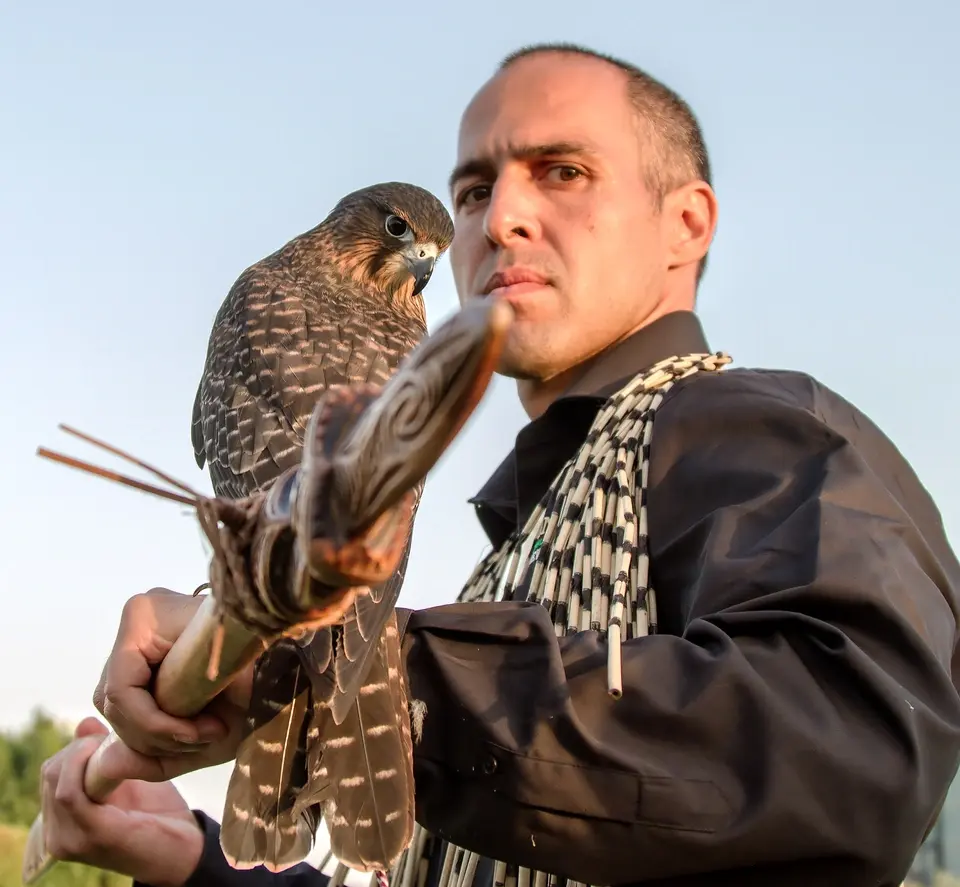
Within Māori culture, people and birds were traditionally associated by poetic metaphor, by appearance and behaviour. For example, the choice of bird feather worn by a warrior was a symbol of association between the human and the chosen bird. Warriors who wore the head plume of the kārearea were asserting that they were as fierce and reckless as the falcon. As those that have entered a falcon nest can attest – this would have been a warrior to avoid!
Did you know the All Blacks mimic a raptor every time they play?
It is said that the glaring, fiery eyes of the morepork inspired the rolling ‘pūkana’ eyes seen in many haka and waiata. Most famously, the pūkana is employed during the ceremonial ‘Ka Mate’ haka by the All Blacks before a rugby game. There is no doubt that these glaring eyeballs play a significant part in the intensity of this powerful haka. So the next time you see the All Blacks steam over the try line say a small thank you to our friend the morepork for its handy tip on how to intimidate the opposition!
The glowing eyes of the morepork are similarly found in many Māori carvings, with pāua shell being inlaid into the wood to make them a prominent, staring feature of the carving.
The Kāhu is Also Commonly Referred to in Māori Mythology.
The kāhu (swamp harrier) appears in Māori mythology in the story of Māui. During this story the colour of the kāhu’s plumage is told to be the result of it having been scorched by the fire of Mahuika.
A kāhu seen flying over a village during a tribal meeting was seen as a good sign, and the phrase "e hui o ngā kāhu" refers to a meeting of the Māori chiefs.
Harriers were commonly caught in snare type traps known as ‘wiwia’ for their feathers. These traps were constructed from rushes and long grasses and the feathers were commonly used as head plumes known as 'piki kāhu' or for decorating traditional flax baskets known as 'kete'.

The Ruru is a Powerful Figure in Māori Mythology and Tradition.
Being said to originate from the underworld, the morepork (ruru) is strongly associated with the spirit world in Māori mythology. For example, it is believed that if a morepork sits conspicuously nearby or enters a house there will be a death in the family and in times gone by these strong beliefs led to some Taranaki Māori eating morepork, believing that it would prolong their lives.
The ancestral spirit of a family group can take the form of a ruru in some Māori tradition. This spirit is known as Hine-ruru, the 'owl woman'. It is believed that these owl spirits can act as kaitiaki or guardians and have the power to protect, warn and advise.
While its high piercing ‘quee’ call spells bad news, its normal ‘more-pork’ call means that good news is on its way.
Raptor Weather Forecasts
Before the advent of modern day meteorologists and the grinning personalities we refer to today as “weather reporters” it was commonplace for people to predict the weather by observing the behaviour of animals that they believed had predictable patterns. Māori, and later Pākehā (caucasians), observed New Zealand’s birds in this manner.
The behaviour of our birds of prey in particular were thought to predict the upcoming weather patterns. For example:
- A ruru (morepork) heard calling once at night was a sign of bad weather
- Morepork answering one another meant a storm was brewing
- The appearance of many morepork in autumn was a sign of gales and a heavy winter
- The hurried chuckling cry of the morepork was a sign of rain
- If the kārearea (New Zealand falcon) screamed on a fine day - it was predicted to rain the next
- If the kārearea screamed on a rainy day – it was predicted to be fine the next
- The cackling call of the whēkau (laughing owl) predicted the onset of rainy weather
Judging by how often it rains when our weather reporters say it is going to be sunny – it seems like this may well have been just as accurate as those weather reports we get every night on TV!
